Solana news: Ethena's USDe Supply on Solana Increases by $450M in Four Days
USDe Supply Surges on Solana
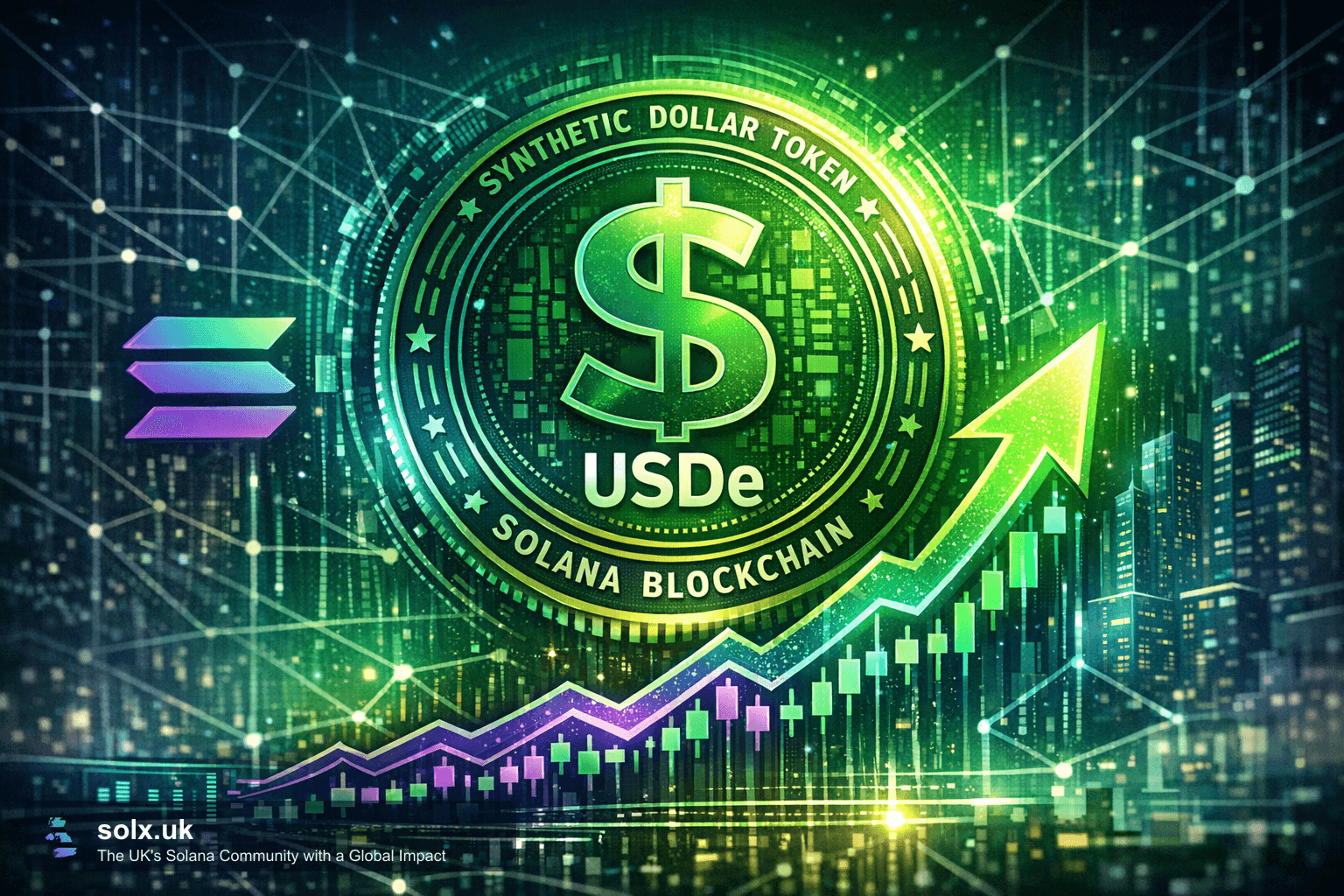
Ethena’s synthetic dollar, USDe, experienced a significant increase in supply on the Solana network, rising by more than $450 million within four days. This rapid capital inflow highlights Solana’s growing role as a hub for USDe liquidity outside of Ethereum.
Background: What is USDe?
USDe is a synthetic dollar created by Ethena Labs and launched in February 2024. Unlike traditional stablecoins such as USDC or USDT, which are backed by reserves in bank accounts, USDe maintains its peg through a delta-neutral hedging strategy. Ethena holds crypto collateral and opens short positions to offset price risk, aiming to provide a dollar-equivalent value without holding actual dollars.
Growth and Multi-Chain Expansion
Since its launch, USDe has become the third-largest dollar-pegged asset in decentralised finance (DeFi). By April 2025, the total supply reached around $4.7 billion, with 70% of backing in liquid stablecoins and a 101% collateralisation ratio. USDe’s multi-chain presence is enabled by LayerZero’s Omnichain Fungible Token (OFT) standard, allowing seamless movement across more than 10 blockchains and achieving approximately $50 million in weekly cross-chain volume.
Risks and Considerations
USDe’s delta-neutral model relies on positive funding rates in perpetual futures markets. If funding rates turn negative for extended periods, Ethena may need to use its insurance fund to maintain the peg. The 101% collateralisation ratio offers a limited buffer, and the concentration of USDe on Solana introduces potential risks if network-specific issues arise. While diversification across chains is intended to reduce risk, rapid capital concentration on Solana could undermine this benefit.
What to Watch
- Whether USDe supply on Solana stabilises or continues to grow
- Changes in Ethena’s collateral composition
- Potential impacts of market conditions on the protocol’s stability
Investors should monitor both the distribution of USDe across chains and the evolving makeup of its collateral backing as the protocol scales.