Solana news: Rising US Treasury Yields Challenge Bitcoin’s Hard-Money Narrative
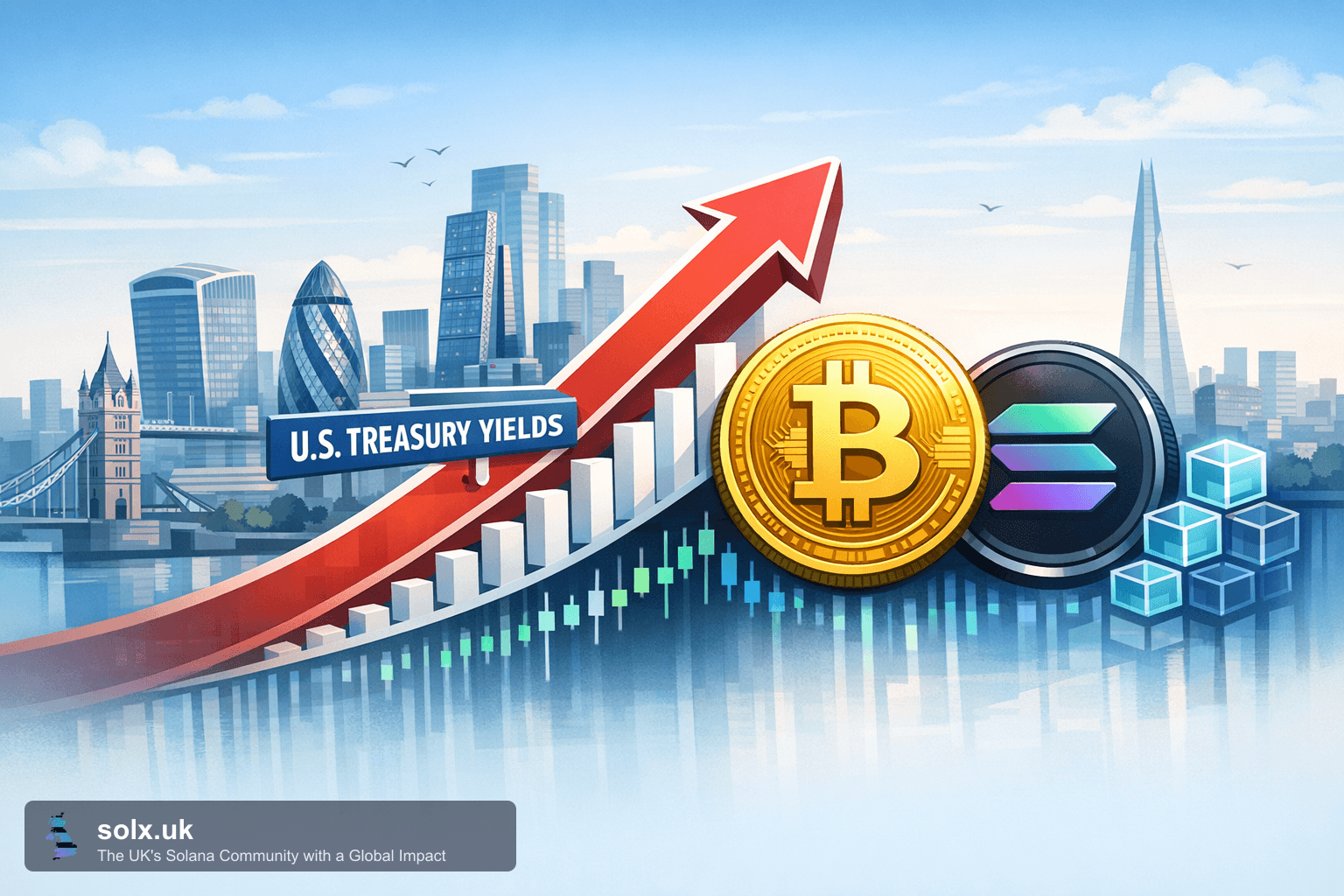
US Treasury Yields Reach 5%: Market Impact
On 20 May 2026, the yield on 30-year US Treasury bonds surpassed 5% for the first time since 2007. This move, driven by persistent inflation and high government borrowing, has significant implications for global financial markets, including digital assets such as Bitcoin and Solana.
Institutional Allocators Reassess Crypto Exposure
Higher Treasury yields offer institutional investors a secure, attractive return, increasing the opportunity cost of holding volatile, non-yielding assets like Bitcoin. As a result, Bitcoin fell below $80,000, and US spot Bitcoin ETFs experienced notable outflows. This shift demonstrates how macroeconomic factors now influence crypto markets more directly than before.
Tokenised Treasuries and On-Chain Trends
Tokenised US Treasuries have reached a record $15.35 billion in on-chain market value, reflecting a growing trend of yield-sensitive capital moving into blockchain-based representations of traditional assets. This development is relevant for the Solana ecosystem, which is increasingly used for tokenising real-world assets and supporting decentralised finance (DeFi) applications.
Why This Matters for Solana and the UK
For UK investors and builders, the interplay between traditional finance and digital assets is crucial. As institutional capital becomes more selective, Solana-based projects focusing on real-world asset tokenisation, DeFi, and efficient transaction processing may see increased relevance. The UK’s regulatory environment and financial sector expertise position it to benefit from these evolving trends.
Long-Term Outlook: Fiscal Conditions and Digital Assets
While higher yields currently pressure speculative assets, the underlying fiscal conditions—rising deficits and debt servicing costs—reinforce the long-term argument for hard-money, fixed-supply assets. This dynamic is likely to influence both Bitcoin and Solana’s role in diversified portfolios, especially as UK institutions explore blockchain adoption.